

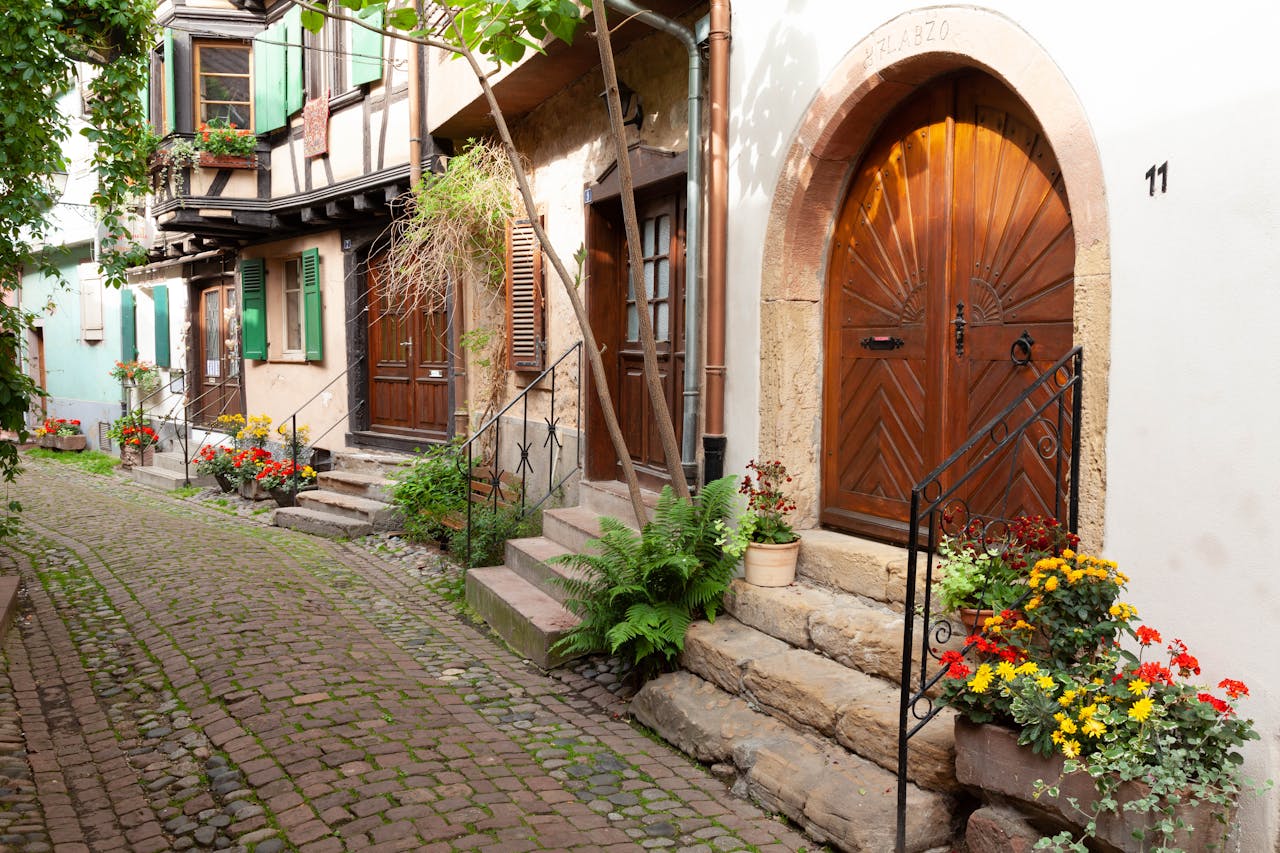
A cottage garden is like stepping into a storybook—full of overflowing blooms, winding paths, and a sense of timeless romance. This style blends beauty with abundance, allowing flowers, herbs, and greenery to mingle freely in a way that feels both intentional and natural. Whether you have a sprawling yard or a modest plot, a cottage garden can transform it into a lush, welcoming retreat.
Why Choose a Cottage Garden Design?
Cottage gardens are more than just a planting style—they’re a mood. They invite you to slow down, explore, and lose yourself in the textures, scents, and colors of nature. The magic lies in the balance of structured chaos—plants grow freely but still feel harmonious, creating a space that’s charming without being overly manicured. This design also encourages biodiversity, attracting bees, butterflies, and birds, making your garden lively in every season.
10 Cottage Garden Design Ideas to Inspire You
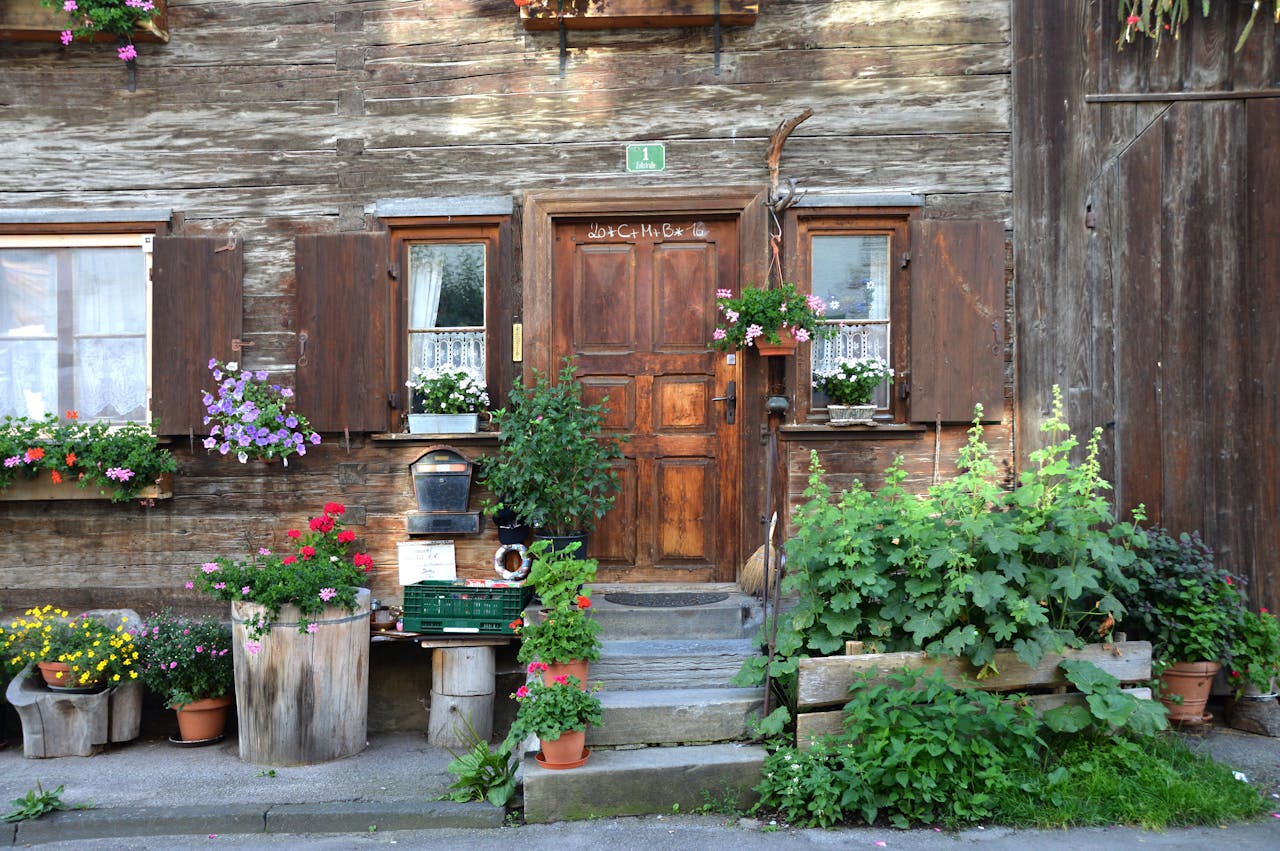
Use mixed planters near your entry to build a clear cottage garden feel. Place wooden tubs, clay pots, and small crates close to each other to form a tight cluster of color. Keep flowers in different heights for stronger visual impact. Add window boxes with bright blooms to frame the front wall. Use hanging pots near the door to pull the eye upward. This setup gives your space a lived in and welcoming look.
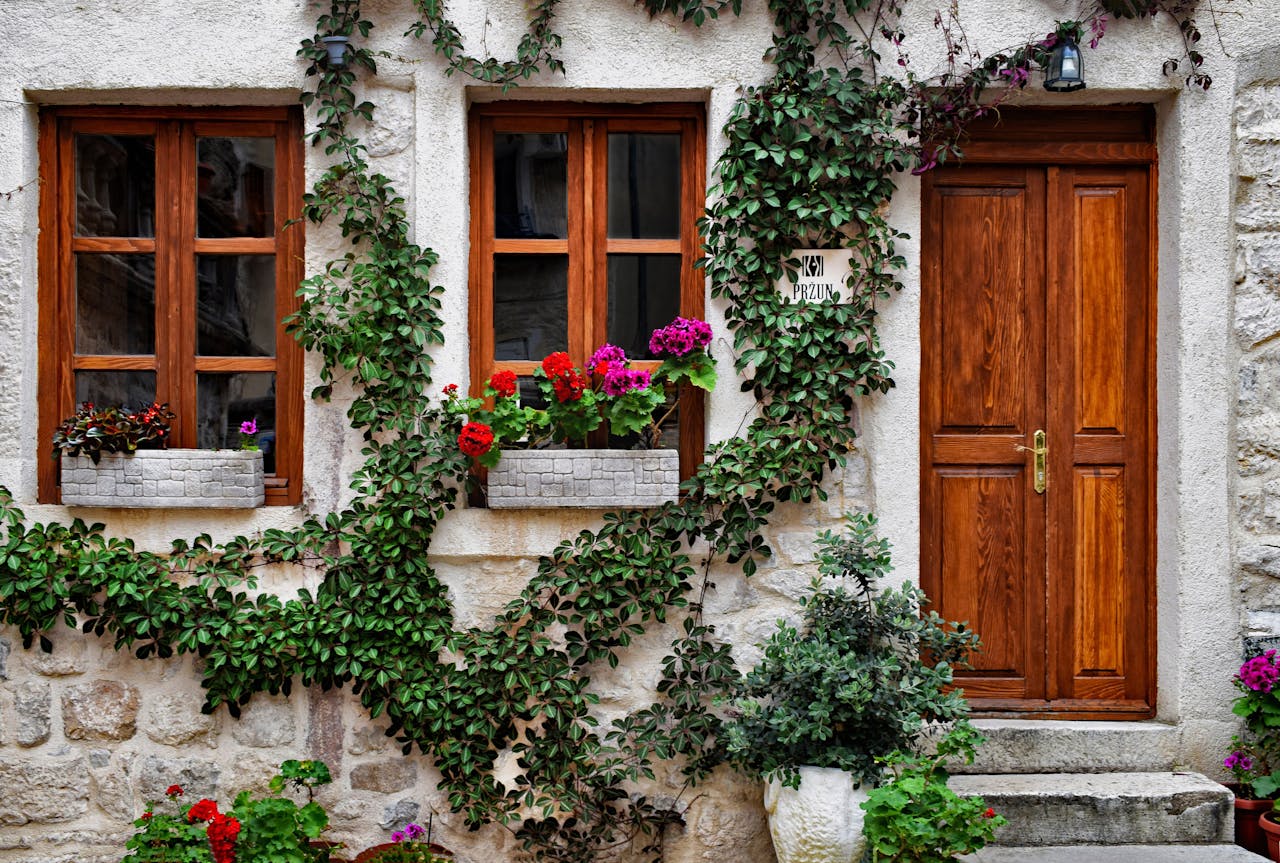
Use climbing plants around your windows and door to build a clear cottage garden look. Let the vines follow the wall to frame the wood trim and soften the hard surface. Add window boxes with bright flowers to bring strong color to the stone. Keep the boxes simple and neutral so the blooms stand out. Place a few small shrubs near the base to fill the lower area. This setup gives your entry more shape, more texture, and a natural flow that feels warm and lived in.
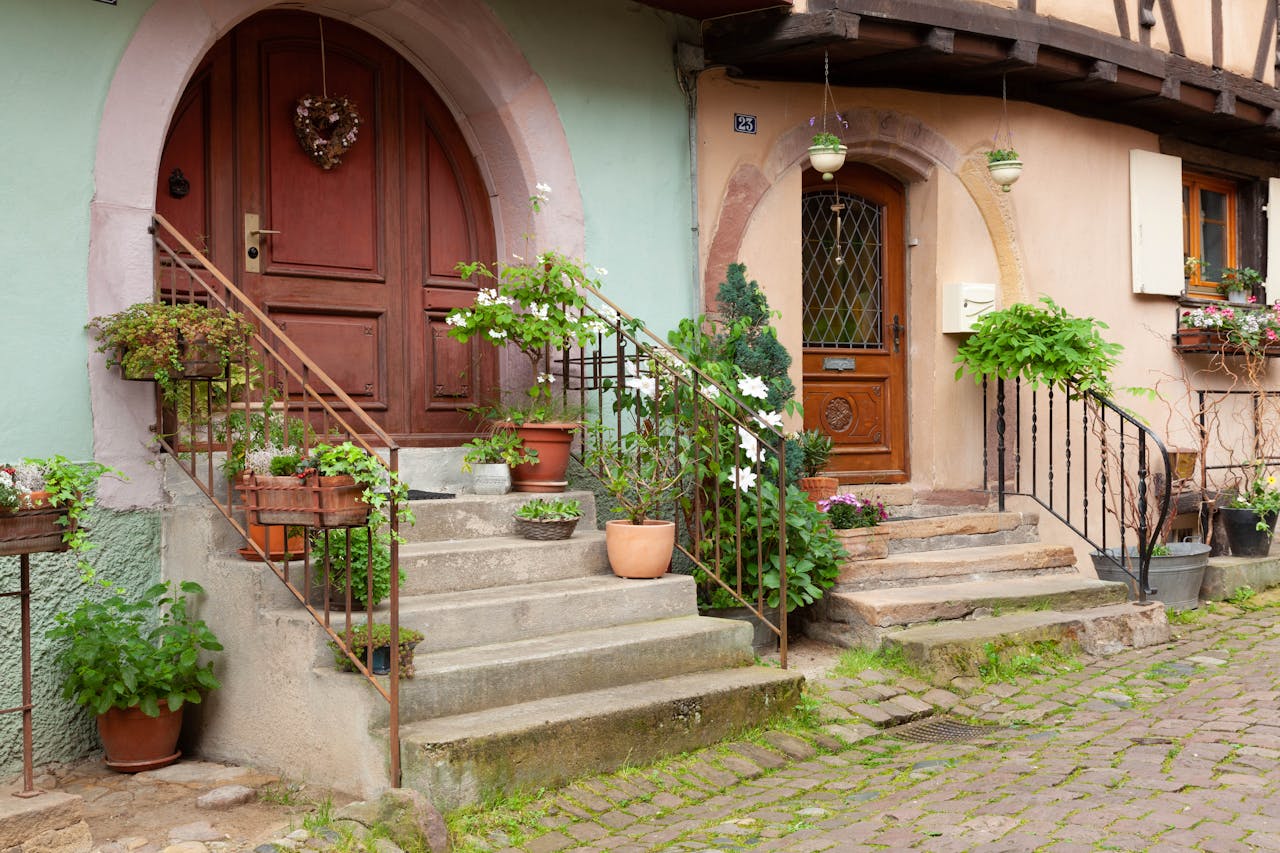
Use potted plants along your steps to build a clear cottage garden feel. Place clay pots, wooden boxes, and hanging planters on both sides of the railings to frame the entry. Keep taller plants near the top steps and smaller ones near the bottom to form a smooth line. Add flowering vines to the railing for extra height and movement. Mix herbs, shrubs, and blooms to bring more texture and color. This layout gives your doorway a lived in look and stronger visual interest without heavy work.
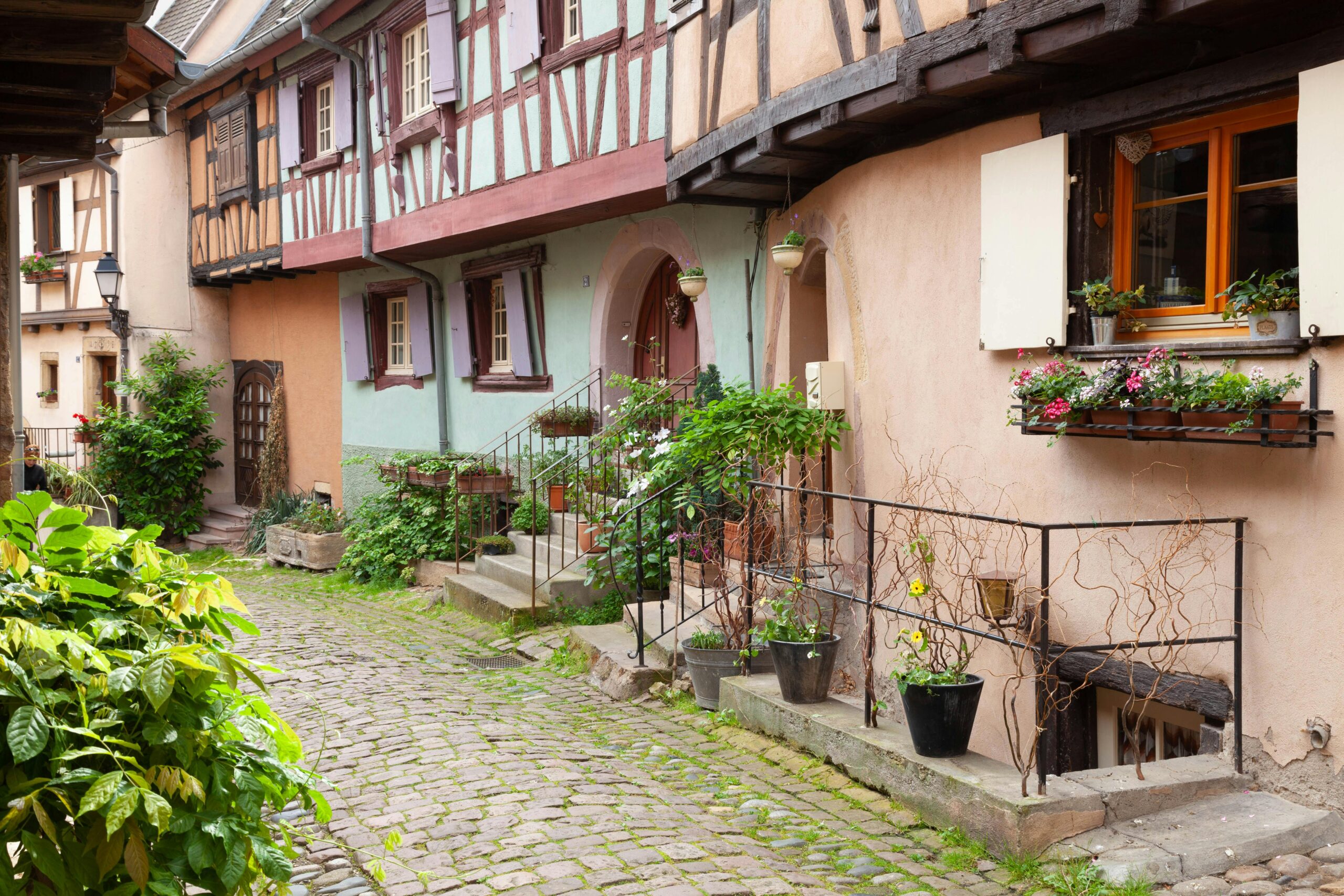
Use small planters, window boxes, and railing pots to build a cottage garden look along the full walkway. Place flowers near the windows to bring strong color to the pastel walls. Keep potted greenery near the steps to guide the eye toward the entry. Add climbing plants near the railings to bring height and soften the structure. Mix flowers, herbs, and foliage for stronger texture and a lived in feel. This setup gives the narrow street more charm and makes each doorway feel warm and inviting.
Line your doorway with bold, colorful planters to bring instant cottage charm to a narrow street. Use bright flowers near the steps to create a cheerful welcome, and mix in leafy plants like ferns to add softness and texture. Let pots of different shapes and sizes sit along the railing so the greenery naturally climbs upward. Keep the arrangement loose and slightly imperfect so it feels lived-in and warm. This simple setup turns an ordinary entry into a cozy, picture-perfect corner that feels full of life.
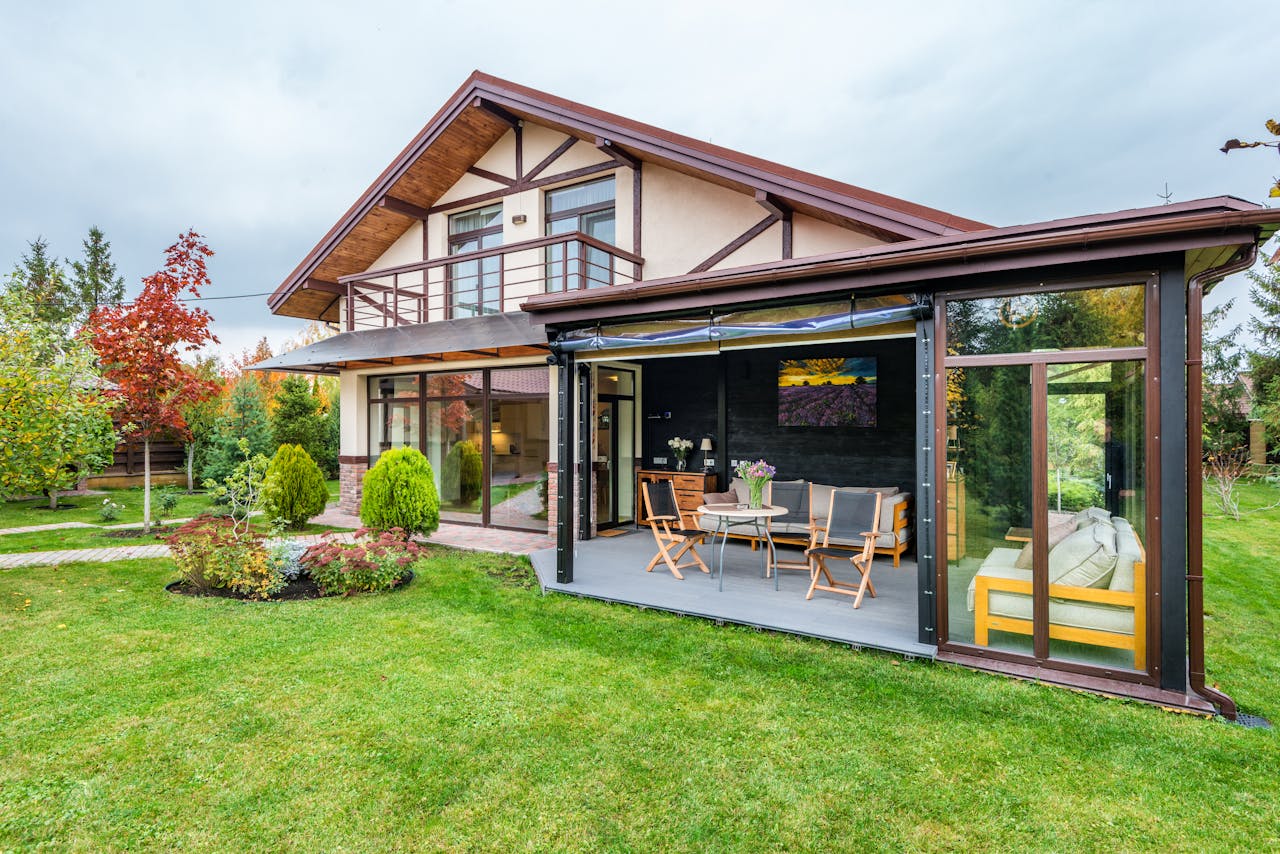
This charming home effortlessly blends modern design with cozy comfort, set against a lush, green backdrop. The well-manicured lawn stretches invitingly around the house, dotted with vibrant trees and carefully shaped shrubs that add bursts of color and texture. A glass-enclosed patio extends from the main building, creating a seamless indoor-outdoor living space. Here, a small seating area with wooden chairs and a table encourages quiet mornings with coffee or relaxed evenings enjoying the view. The combination of warm wood tones, large windows, and natural light makes the home feel open, welcoming, and perfectly in harmony with its serene garden surroundings.
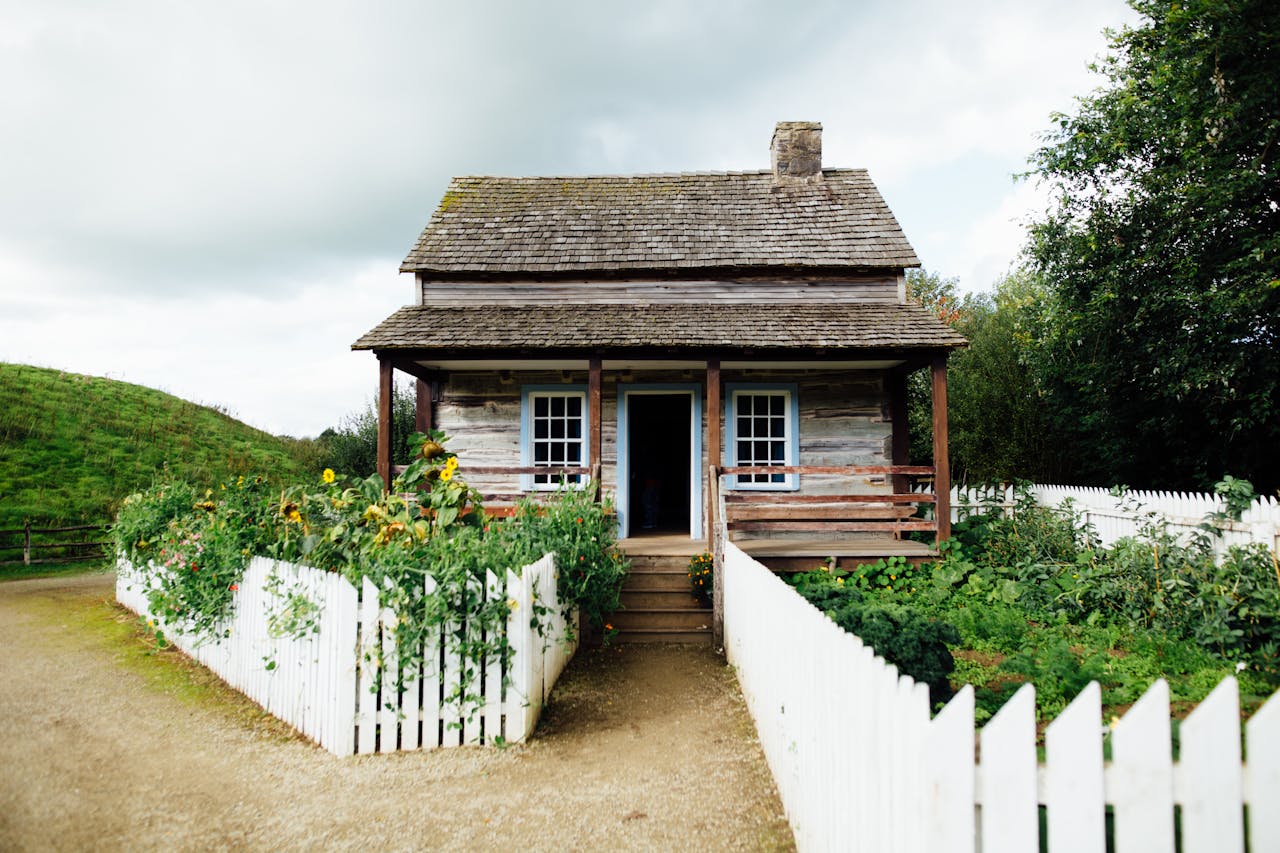
The white picket fence is the first detail that pulls you in. Slightly imperfect, slightly worn, it frames the garden without trying to control it. Climbing plants spill through the slats, blurring the line between structure and nature. Sunflowers lean casually toward the path, while dense green foliage fills every available inch, creating that lush, abundant look cottage gardens are famous for. It doesn’t feel manicured — it feels loved. Like someone planted what they enjoyed, then let it grow freely.
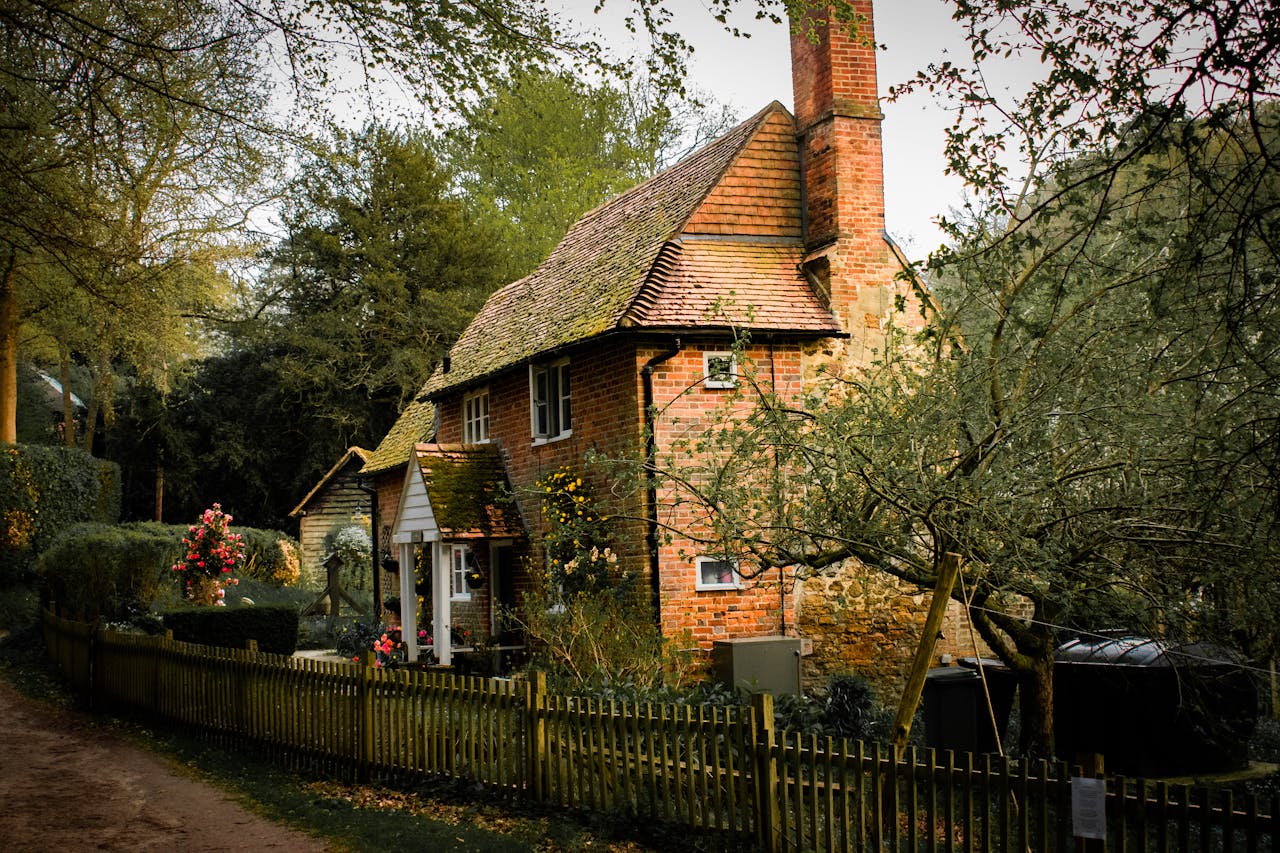
This cottage feels like it belongs to a storybook, quietly tucked beneath tall trees and softened by years of growth and care. The warm red brick exterior, mossy roof tiles, and tall chimney instantly set a romantic, old-world tone, while climbing greenery and blooming flowers gently blur the edges between house and garden. A simple wooden fence frames the space without enclosing it too tightly, allowing the garden to feel natural and welcoming rather than formal. Mature trees lean protectively around the home, creating dappled light and a sense of privacy that feels calm and lived-in. Everything here works together effortlessly — the textures, the greenery, the weathered details — capturing the essence of cottage charm that feels timeless, peaceful, and beautifully unpolished.
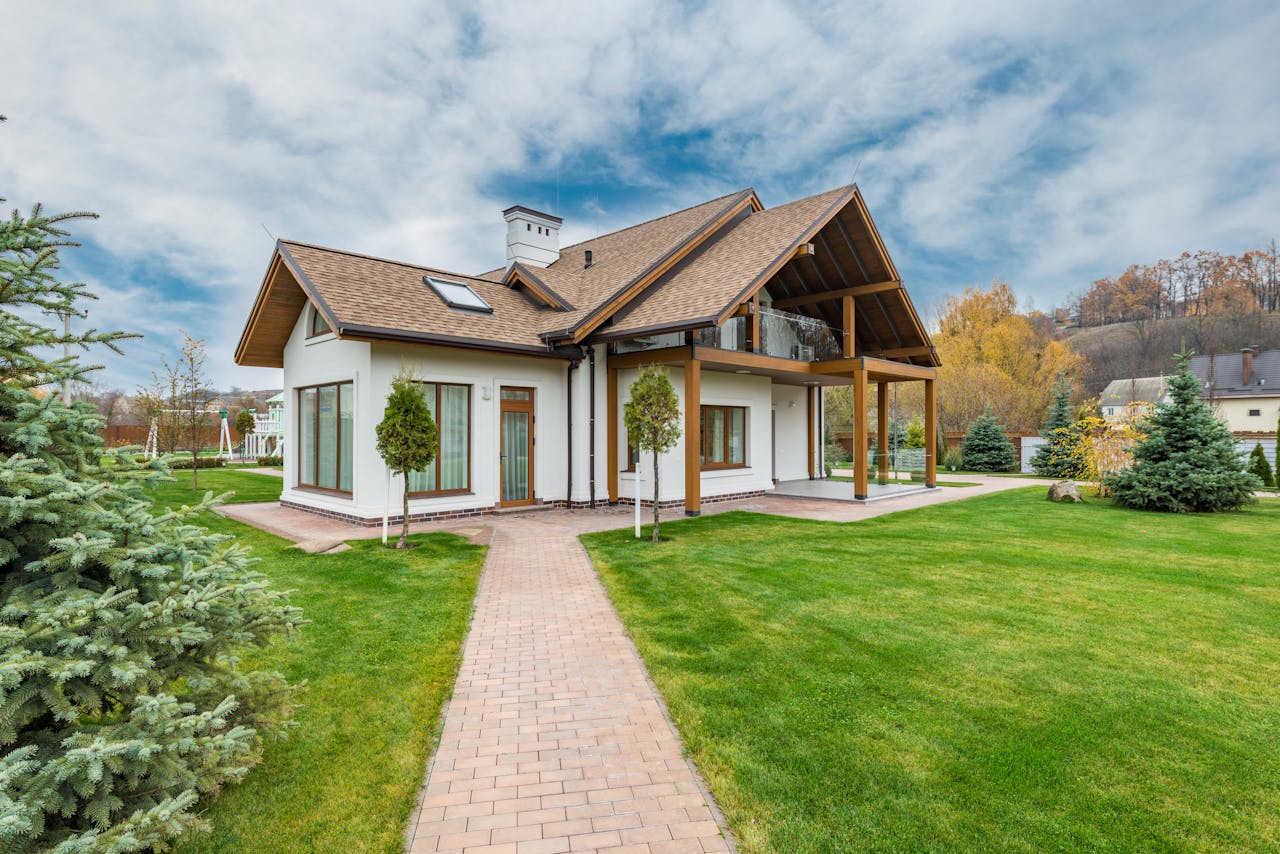
This home feels fresh, calm, and thoughtfully designed, blending modern comfort with a soft, natural outdoor setting. Clean white walls and warm wood beams give the exterior a welcoming, balanced look, while the sloped roof and covered balcony add architectural interest without feeling heavy. The neatly trimmed lawn stretches openly around the house, creating a sense of space and ease, and the simple paved walkway gently guides you toward the entrance. Young trees and evergreens are placed with intention, adding structure while still leaving room for growth. Everything here feels open, light, and peaceful — a perfect example of how a well-planned outdoor space can feel polished yet relaxed, modern yet quietly inviting.
Conclusion
A cottage garden is more than a landscape—it’s a feeling. It’s a place where plants grow abundantly, colors blend harmoniously, and every corner invites you to linger. By mixing structure with a little wildness, you can create a garden that feels both enchanting and alive—a true escape from the everyday.
